May06
Andrea Meyer
Point: Merging functionality can create innovations in efficiency and convenience
Story: As someone who spends more than my fair share of time in airports, I’ve wondered if passengers don’t deserve frequent flier miles for distances walked all over the terminal buildings. The food court is one place, the gate is in another, and finding a power outlet to recharge the laptop for the long flight home is always a challenge. In most airports, no single location suffices for all these purposes. When sitting at the gate, one doesn’t know if one has time to go grab a bite to eat. And when sitting at the restaurant, one doesn’t know if one’s flight is about to board.
OTG tackled this problem when they designed the airport experience for JetBLue’s new T5 terminal at JFK airport. OTG created a new mixed-use approach for some of the gate space. About half the 26 gates have special 16-seat clusters called “re:vive” that lets passengers eat, recharge, and keep an eye on their flight. Touchscreen monitors and credit card readers let passengers order, pay for, and have food delivered right to the gate. The ordering process even provides a delivery time estimate before a passenger gives the final “OK” for the order.
“Re:vive” is more than just a passenger convenience. It also boosts revenues for food concessionaires by reaching the underserved market of so-called “gate huggers” — passengers who don’t want to leave the gate area.
The “re:vive” concept is not unlike the notion of mixed-use building developments for cities, which create buildings with retail on the first floor, offices on the second and residential condos or lofts on the top floors. Mixed-use reduces urban sprawl and urban commuting times in the same way that re:vive reduces airport terminal sprawl and the burden of dragging luggage to and fro. Co-locating the functions that people need provides convenience.
Action:
- Look for the customer activities that are currently separate but that could be concurrent or co-located
- Merge functionality to reduce time, opportunity costs, and logistical overhead
- Grow markets by serving those that don’t or won’t move from activity to activity
Source: World Innovation Forum presentation May 6, 2009
Case study, How-to, Innovation
May05
Andrea Meyer
Point: Innovate the experience, not just the product 
Story: At the World Innovation Forum today, C. K Prahalad asked the audience about their experiences with “Build-a-Bear” — an e-commerce company that lets kids of all ages design their very own Teddy Bear. Audience members reported spending as much as $200 in choosing the look of the bear, the amount of stuffing in the bear, adding a custom sound to the bear, getting the bear’s birth certificate, buying clothing for the bear, and buying accessories and siblings for the bear. This culminates in making “The Bear Promise” to care for this personalized stuffed animal. Discussing the depth of the experience and the simplicity of the physical product revealed that the bear embodies both negligible product costs and priceless customer experiences.
One of the “trick questions” for job interviews is to ask the candidate, “How would you redesign a Teddy Bear?” This example shows that the design of the bear may not change much, but the design of the experience of buying the bear may be where the real opportunities are. In fact, Build-a-Bear is more about the customer redesigning the Teddy Bear than it is about the company redesigning the Teddy Bear. Therefore, C. K Prahalad recommended that companies think more about experience innovation to complement and enhance product innovation.
The Build-a-Bear phenomenon is not unique to toys. Other companies provide experience-intensive products. These include Medtronic’s pacemaker (the device is augmented with remote monitoring, health records coordination, and provider networking services), Bridgestone Tires (by-the-mile fleet usage pricing with value-added vehicle usage services), Nike’s iPod-connected shoes (shoe sensor feedback that drives work-out feedback and performance). The point is to think about the value chain of the experience, rather than the value of chain of the product.
Action:
- Seek to solidify customer relationships through well-designed experiences
- Innovate to improve the value of the experience, not just the performance/cost of the product
- Leverage customer innovation through co-creating experiences and products
- Create an ecosystem of collaborators to support the experience
Innovation, Strategy
May05
Andrea Meyer
Point: Breakthrough innovation requires nonlinear change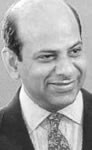
Story: In his presentation at the World Innovation Forum, strategist and Dartmouth professor Vijay Govindarajan used the analogy of Olympic high-jumping to illustrate the non-linear thinking that companies need to make to create breakthrough innovations. The traditional approach to high-jumping until 1920 was the “scissors” approach: jumping over the bar with a scissoring motion similar to what is used by hurdlers. The highest jump possible was about 5′ 3″.
The best approach to jumping higher, however, is to identify the limiting factor in the jump. For high-jumping, the limiting factor is the jumper’s configuration of body parts relative to their center of gravity and to the bar. In the 1920s, the innovation called the “western roll” changed the jumping style from a hurdling over the bar with a scissors kick to rolling over the bar sideways with the jumper’s back to the bar. In the 1960s, the innovation of the straddle changed the center of gravity even further with the jumpers keeping their belly to the bar. And in 1968 the Fosbury flop (invented by Dick Fosbury) changed the motion yet again: jumpers launch themselves straight up into the air using both feet, and then they twist over the bar so that the head clears first.
The challenge for organizations: you can’t win by incrementally improving the incumbent scissors kick if your competitors are inventing the western roll or the Fosbury flop. Breakthrough innovations require removing or changing the limiting factor. This often means breaking old assumptions. Prior to the Fosbury flop, all high jump techniques assumed that the jumper goes feet-first over the bar and lands on their feet. Fosbury jumped head first over the bar to flop on the mat and extended the possible jumping height to over 8 feet.
Action:
- Document the fundamental limits that seem to prevent further incremental innovation
- Consider ways to break those limits or bend those limits
- Examine the “how we’ve always done it” assumptions to find opportunities for radical change
See Vijay Govindarajan’s blog here.
Innovation, Strategy